How to Clean Solid Wood Furniture
In this guide, we’ll cover everything you need to know about cleaning solid wood furniture — from daily dusting to deep cleaning, how to treat stains, different approaches for different woods, and how to use oils and protective finishes safely.
1. Understanding Solid Wood
Solid wood furniture is made from natural timber, meaning its fibres are alive with tiny pores, oils and grain patterns. That’s why it:
-
Reacts to humidity changes
-
Expands and contracts slightly
-
Shows wear differently from synthetic surfaces
-
Benefits from gentle, wood-friendly care
Solid woods include oak, walnut, teak, maple, mahogany, pine and many more. Each has its own grain, oil content and hardness — and those factors influence how it should be cleaned and protected.
2. The Basics: Daily and Weekly Care
Dust Regularly
Dust is wood’s enemy — particles can scratch the surface over time if rubbed in.
Best practice:
-
Use a soft, lint-free cloth such as cotton or microfiber
-
Dust in the direction of the wood grain
-
Avoid feather dusters that can scatter dust into the air
Light Cleaning
For general cleaning:
-
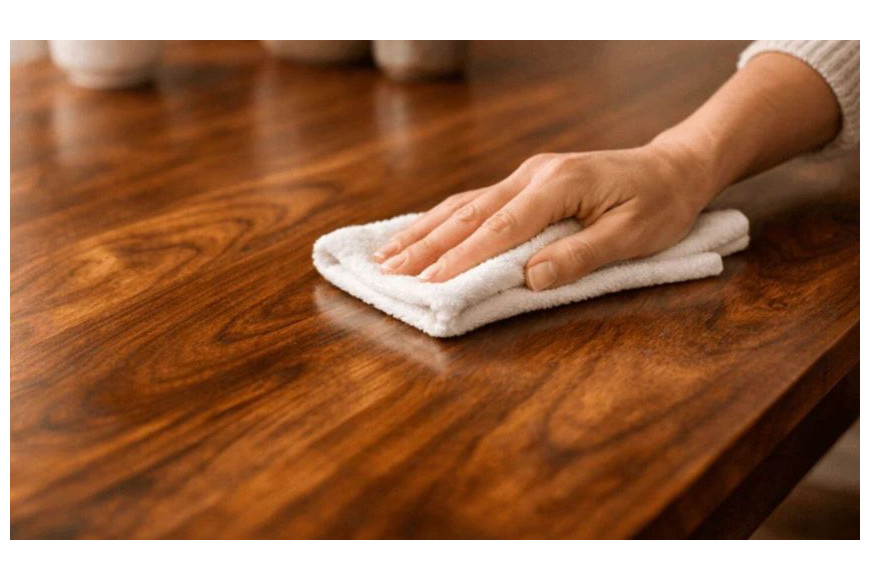
Slightly dampen a soft cloth with plain water
-
Wipe the surface gently
-
Immediately dry with a clean, dry cloth
This prevents moisture from penetrating the wood.
3. Spot Cleaning: Spills and Marks
Accidents happen — here’s how to handle them without damaging the finish:
Water Rings and Glass Marks
These often appear from cold glasses placed on bare wood.
Try:
-
Wiping immediately with a dry cloth
-
Rubbing gently with a mixture of equal parts white vinegar and water
-
Following with a dry cloth
Avoid harsh rubbing — it can wear through finish layers.
Sticky or Greasy Stains
Food or oily fingerprints respond well to mild cleaning.
Mix:
-
A few drops of gentle dish soap with warm water
Dampen a cloth with this solution, wipe the area, then rinse and dry thoroughly.
Ink, Marker or Tough Stains
These may require caution:
Do NOT use:
-
Nail polish remover
-
Acetone
-
Harsh solvents
These can strip the wood’s finish.
Instead:
-
Test a specialised wood cleaner in an inconspicuous area
-
Use a soft toothbrush for light abrasion, if recommended
4. Different Woods, Different Treatments
Hardwoods (e.g. Oak, Walnut, Mahogany)
These are dense and resilient, but:
-
Avoid abrasive cleaners
-
Be gentle with water — even hard woods can warp
Use a wood-safe cleaner and finish with a soft buff.
Teak and Oiled Woods
Teak is prized for its natural oils.
Do:
-
Clean with mild soap and water
-
Apply teak oil or teak-specific conditioner seasonally
Avoid:
-
Heavy detergents
-
Abrasive pads
Teak oil restores natural colour and protects the surface.
Softwoods (e.g. Pine)
Softer woods dent more easily and may require protective coatings.
-
Don’t over-wet
-
Regularly dust and dry
-
Use furniture polish or wax to seal
5. Oils, Polishes and Protection
Furniture Oils
Oils replenish and protect wood by penetrating its pores.
Common choices:
-
Teak oil (great for teak and other oily woods)
-
Linseed oil
-
Tung oil
-
Specialised wood conditioning oils
Application tips:
-
Apply a thin coat with a soft cloth
-
Let it soak in (usually 10–15 minutes)
-
Wipe away excess
-
Buff with a dry cloth
Repeat every few months or as needed.
Wax and Polish
Wax forms a protective layer on the surface. It’s ideal for:
-
Older antiques
-
Furniture with wax finishes
-
Wood you want to give a soft sheen
Application:
-
Use paste wax or a furniture-grade polish
-
Apply sparingly and buff well
Avoid silicones — they can build up and become difficult to remove.
6. What to Avoid
Solid wood is beautiful but sensitive. Never use:
❌ Bleach
❌ Ammonia cleaners
❌ All-purpose sprays with harsh solvents
❌ Heavy scrubbers or steel wool
❌ Excessive water
These can de-laminate surfaces, fade finishes, and leave permanent marks.
7. Dealing with Scratches and Dents
Minor Scratches
You can often disguise scratches with:
-
A walnut rubbed gently into the scratch
-
Furniture markers or wax sticks matching your wood
-
Light buffing with a soft cloth
Deeper Damage
Consult a professional for refinishing or repair if the wood is deeply gouged or the finish is compromised.
8. Seasonal Tips
Wood reacts to humidity:
In Dry Months
-
Use a room humidifier
-
Avoid placing wood near radiators
In Humid Months
-
Use a dehumidifier
-
Ensure good air circulation
This prevents cracking and warping.
9. Caring for Outdoor Solid Wood (if applicable)
Outdoor wood needs extra protection:
-
Use teak or outdoor wood oil
-
Avoid prolonged direct sun exposure
-
Cover when not in use
Outdoor woods like teak and eucalyptus perform well with proper maintenance.
10. Final Tips for Longevity
-
Use coasters and placemats
-
Place felt pads under decorative objects
-
Avoid placing hot cookware directly on wood
-
Re-oil or polish regularly based on use and room conditions
Conclusion: Invest in Care, Preserve Beauty
Solid wood furniture rewards the owner. With regular dusting, mindful cleaning, and appropriate oils or protective finishes, your pieces will remain not just functional, but heirlooms of style — rich with grain, colour and character.
With the right approach, solid wood doesn’t just last — it becomes even more beautiful with time.